- Insights
Streamlining Fire Department Paid Details: From Apparatus Billing to Personnel Scheduling
Fire and rescue departments are built around readiness, emergency response, and community protection. Whether responding to structural fires, delivering life-saving emergency medical services, or conducting hazardous materials containment, frontline crews must remain focused on operational excellence.
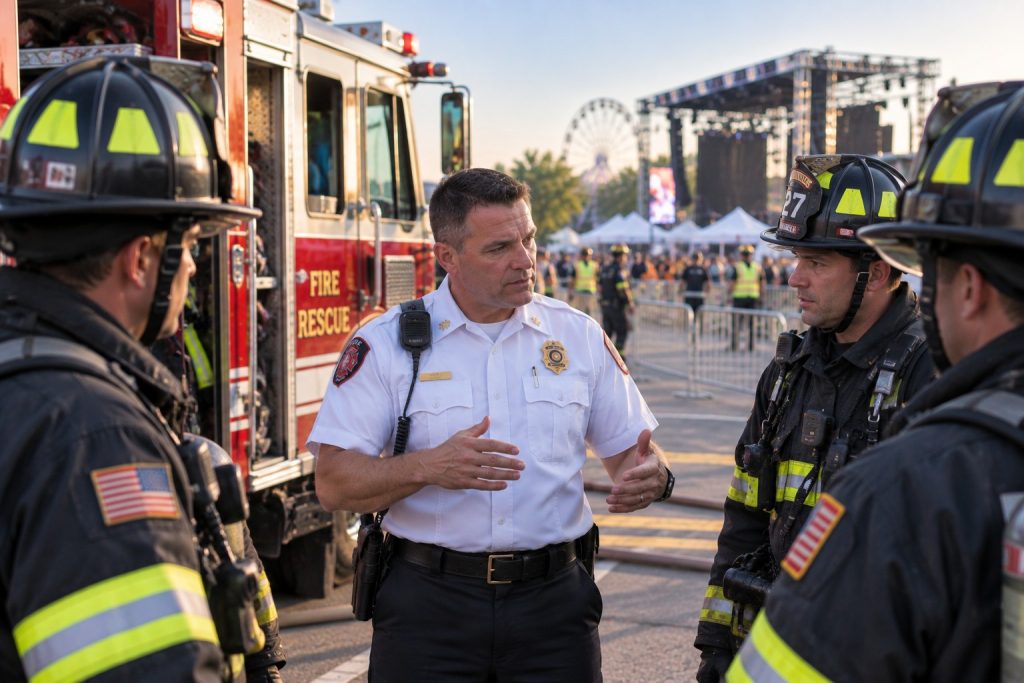
Yet increasingly, municipal and county fire departments are called upon to provide specialized coverage for non-emergency community operations. Private venues need certified personnel for required fire watches; commercial developers require standby units during high-risk utility burns or pipeline work; and municipal festivals request dedicated EMT, paramedic, and fire suppression standby.
These assignments, commonly referred to as paid details or special event deployments, provide valuable community safety coverage. However, administering them internally often creates significant administrative strain: tracking apparatus run-time rates, coordinating volunteer and career personnel, issuing invoices, and recovering municipal fees.
Implementing a comprehensive, specialized administration model allows fire leadership to optimize detail management while fully recovering equipment costs and keeping crews dedicated to their core mission.
The Administrative Complexity of Fire and EMS Details
Managing details in the fire service involves distinct logistical and financial layers that differ from standard law enforcement road details:
- Dual-Track Cost Structures (Personnel vs. Equipment): In addition to compensating firefighters, paramedics, or fire inspectors for their time, departments must charge commercial clients for specialized equipment. Deploying engines, ladder trucks, water tenders, or utility task vehicles (UTVs) carries fuel, wear-and-tear, and operational costs that should be accounted for through accurate apparatus billing.
- Complex Certification Alignment: A single festival or industrial detail may require specific capabilities, such as a certified arson investigator, a paramedic-level medical provider, or a state-licensed pump operator. Matching qualified personnel while respecting seniority and shift availability creates scheduling complexity.
- Municipal Budget Exposure: Private event safety should not become an unintended expense for local taxpayers. When fire department staff must manually issue invoices and follow up on late commercial payments, municipalities can face uncollected apparatus fees and delayed personnel compensation.
Separating Emergency Operations from Event Administration
To address these challenges, fire agencies can delegate the operational mechanics of paid details to specialized administrative partners.
Under this model, the fire department retains full operational authority over which details are approved, which personnel are eligible, and what apparatus rates are charged. The administrative provider handles the back-office processes within those agency-established rules.
An event organizer or contractor can submit a request for fire watch, EMS, or other approved detail coverage. Personnel and apparatus rates established by the department are then applied to the request, and eligible personnel can be notified based on the department’s scheduling and certification requirements.
After the assignment, the administrative process can include client invoicing, payment processing, collections, personnel compensation, and remittance of applicable apparatus fees to the municipality or department.
This separation helps prevent fire marshals, administrative captains, and other department personnel from having to function as billing clerks or collection agents, allowing them to devote more attention to life safety, code compliance, training, and operational readiness.
Four Key Pillars of Modern Fire Detail Administration
A specialized administrative system can provide capabilities tailored to the operational realities of fire and rescue services.
1. Complete Apparatus Cost Recovery
Department apparatus represent significant taxpayer investments. When an engine, rescue vehicle, or other department resource is assigned to a private event, industrial site, film production, or similar detail, established vehicle rates can be incorporated directly into client billing.
Properly tracking those charges helps municipalities recover the costs associated with private use of public safety equipment and provides clearer accounting of personnel and apparatus expenses.
2. Certification-Aware Scheduling
Different assignments may require different qualifications.
If a commercial venue requires a licensed fire inspector for a pyrotechnic display or an outdoor event requires an Advanced Life Support (ALS) certified crew, scheduling rules can limit opportunities to personnel who possess the qualifications established by the department.
This helps agencies align staffing with operational requirements without relying entirely on manual credential checks for every assignment.
3. Respect for Shift Schedules and Labor Guidelines
Fire service staffing often operates on specialized multi-day rotations, including 24/48 and 48/96 schedules.
A scheduling platform can account for these calendars while applying agency-established rules regarding eligibility, seniority, shift conflicts, and rest requirements.
This allows paid detail opportunities to be coordinated around primary department responsibilities rather than managed through a disconnected scheduling process.
4. Reliable Payment for Fire Personnel
Firefighters and EMS professionals who work approved paid details should have a clear and predictable compensation process.
An administrative model can separate personnel payment from the timing of private-client collections, depending on the provider’s payment structure. This can reduce the administrative burden associated with delayed invoices while giving personnel greater predictability around compensation for completed assignments.
Real-World Application: Reducing Administrative Burden
Consider a municipal fire department managing seasonal demand from community events, downtown festivals, construction watches, and private venues.
Under a traditional internal model, administrative personnel may spend substantial time processing requests, communicating with event organizers, reconciling equipment usage, coordinating personnel, issuing invoices, and working with municipal finance staff.
An external administration model can centralize many of these processes.
Event coordinators and contractors can work through a dedicated operations team to request approved coverage and receive rates established by the department.
Eligible off-duty personnel can receive available assignments through a centralized scheduling platform, with applicable certification and eligibility requirements incorporated into the process.
The municipality can receive consolidated reporting and applicable remittances for apparatus usage while reducing the need for department personnel to manage individual collection efforts.
At the same time, department leadership can maintain visibility into active and completed details, personnel assignments, and program activity.
Executive Key Takeaways
- Protect Operating Budgets: Accurate apparatus billing helps municipalities recover costs associated with using publicly funded equipment for private assignments.
- Automate Credentialing: Scheduling systems can help ensure specialized assignments are offered only to personnel who meet agency-established qualification requirements.
- Reduce Administrative Drag: Delegating scheduling, billing, collections, and other administrative processes can return valuable time to fire department personnel.
- Maintain Operational Focus: Reducing clerical responsibilities allows station officers, fire marshals, battalion chiefs, and administrative personnel to focus more heavily on emergency readiness, training, prevention, and community risk reduction.
Ready to optimize your fire and EMS paid detail program while improving scheduling, billing, and apparatus cost recovery? Contact the Extra Duty Solutions team today to learn how specialized fire detail administration can support your agency.